Yellow Spots & Fuzzy Leaves: Fungal Identification Guide
Quick Summary (TL;DR)
How to Identify Powdery Mildew, Downy Mildew, and Leaf Spot?
In the Indian context, fungal infections are the #1 cause of plant death, often triggered by high humidity during the monsoon or seasonal transitions. Identifying the specific fungus is the first step toward effective treatment.
1. Powdery Mildew (Erysiphales)
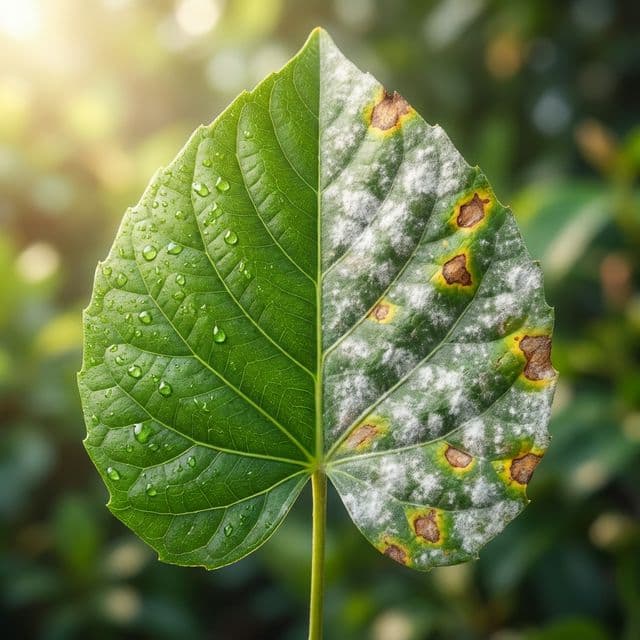
This is extremely common on rose, hibiscus, and bhindi (okra) plants. It looks like a fine layer of white powder or flour has been dusted over the leaves. Unlike most fungi, it thrives in warm days and cool, humid nights.
2. Downy Mildew (Peronosporaceae)
Downy Mildew starts as angular yellow spots on the upper leaf surface. If you flip the leaf over, you will see a fuzzy, greyish-purple growth. This fungus thrives in wet, cool conditions and can quickly defoliate a plant if left untreated.
3. Leaf Spot (Cercospora / Alternaria)
Leaf Spot appears as distinct brown or black spots, often with a yellow halo. As it progresses, the center of the spot might fall out, leaving “shot holes.” It is a major problem for Tulsi, money plants, and flowering creepers.
Expert Tip
Why is Humidity the Main Trigger for Fungi in India?
Indian urban gardens face unique challenges. High humidity (above 70%) combined with stagnant air on balconies or terraces allows fungal spores to germinate within 4-8 hours. This is why fungal identification and preventive spraying are core skills for any homeowner.
Comparison of Common Garden Fungicides
Choosing the right chemical is critical. Use the table below as a quick guide:
| Feature | UPL SAAF | Indofil M-45 |
|---|---|---|
| Technical Name | Carbendazim 12% + Mancozeb 63% WP | Mancozeb 75% WP |
| Action Type | Systemic + Contact (2-in-1) | Contact (Protective) |
| Best For | Curing existing infections | Preventing new infections |
| Residue Color | Light Blue/Grey | Yellowish |
We recommend these professional-grade essentials for your gardening kit:
How to Apply UPL SAAF Effectively
To use UPL SAAF (Carbendazim + Mancozeb) effectively, follow this 3-step process:
- Dilution: Mix 2 grams of SAAF powder per 1 liter of water. Shake well until no lumps remain.
- Application: Spray thoroughly on both sides of the leaves until they are dripping. Fungi often start on the underside!
- Frequency: Spray every 10-12 days during the monsoon or if you see active disease symptoms.
Technical Safety First
- Safety First: Always wear a mask and gloves. Avoid skin contact with chemical powders.
- Weather Watch: Never spray against the wind or right before heavy rain.
- Secure Storage: Keep packages tightly sealed and away from children and household pets.
For more technical research on fungal pathology in tropical climates, refer to the Indian Council of Agricultural Research (ICAR).